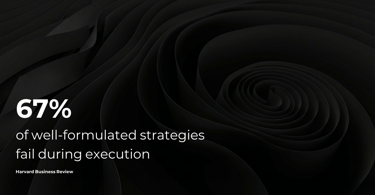
Why Your Marketing Strategy Keeps Failing It's Not the Strategy
Most marketing strategies don't fail because they're wrong. They fail because nobody built the bridge between strategic intent and daily execution. Here are the three breakdowns creating the gap and the one practice that closes it.
INSIGHT
Adrian Fahle
12/1/20253 min lesen
Not because the strategy was flawed. Because the connection between strategic intent and daily work broke down.
We've been studying marketing maturity lately. Reports from McKinsey, Gartner, BCG. Performance data from hundreds of companies. Our own observations working with European scale-ups. Looking for one answer: Why do some companies execute while most don't?
The companies that execute don't have better strategies. They don't have bigger budgets. They don't have smarter people. They have three specific practices that prevent strategic drift. Most companies are missing all three.
Breakdown #1: Nobody Questions Assumptions Weekly
Here's the pattern:
January: Team agrees on strategic priorities. Focus enterprise accounts. Invest in brand. Content drives inbound.
March: Enterprise deals aren't closing. Finance questions brand spend. Content isn't generating qualified leads. But nobody says anything because we decided this in January.
June: Strategy feels wrong but nobody's officially changed it. Team keeps executing while privately doubting everything.
September: Quarterly review. "This isn't working." Six months wasted.
What successful companies do: They question assumptions weekly. One question: "What did we learn this week that might change what we should do?" Takes 10 minutes. Catches drift before it compounds.
Most companies lock in strategy quarterly or annually. Then execute regardless of what they're learning. Because questioning the plan feels like admitting the plan was wrong. The companies that execute well assume they're wrong about something. They just don't know what yet. So they create weekly rhythm to find out fast.
Breakdown #2: You're Tracking Lagging Indicators Only
Most companies measure outcomes after they happen. Revenue this month. Leads last week. Deals this quarter. All lagging indicators. They tell you what happened, not what's about to happen.
Successful companies track leading indicators. Not "how many leads did we generate?" But "what's our lead-to-customer conversion rate trending?" Not "did we hit revenue target?" But "what's our pipeline coverage ratio for next quarter?" Not "how many deals closed?" But "what's our win rate in competitive situations trending?"
The difference: Lagging indicators tell you when you've already lost. Your CAC doubled. Your pipeline dried up. Your win rate collapsed. By the time you see it in revenue, you're six months behind.
Leading indicators tell you while you can still adjust. Lead-to-customer conversion dropping? Something's wrong with qualification or messaging. Pipeline coverage falling? Deals are stalling or you're not creating enough opportunities. Competitive win rate declining? Your positioning is weakening.
Pattern we see constantly: Companies celebrate hitting lead targets for months. Dashboard green. Everyone's happy. Then quarter ends and they missed revenue by 30%. What happened? They tracked lead volume. Didn't track lead-to-customer conversion by source. Their best source dried up. They replaced it with low-quality leads. Hit lead targets. Destroyed pipeline quality. By the time they saw it in revenue, 90 days and significant budget wasted.
Breakdown #3: Strategy Reviews Happen in Silos
Marketing reviews marketing metrics. Sales reviews sales metrics. Separately. Then everyone's surprised when marketing's leads don't convert and sales complains leads are garbage. Everyone's optimizing locally. Nobody's optimizing systemically.
What successful companies do: They review strategy cross-functionally. Marketing and sales in same room. Same dashboard. Same questions. Not "did marketing hit lead targets?" But "are we creating pipeline that converts at target rate?" Not "did sales hit quota?" But "are we winning the deals we should win?"
The pattern: In separate reviews, everyone blames each other. Marketing says sales doesn't follow up fast enough. Sales says marketing's leads are unqualified. In shared reviews, patterns become obvious fast. Marketing's best content attracts wrong customer profile. Sales process built for different buyers than marketing targets. The mismatch is company size, not lead quality. These fixes take minutes when everyone sees same data. They take months in silos.
The Practice That Connects Everything
Successful execution isn't about one big thing. It's about one small thing done consistently. 15 minutes weekly. Marketing and sales together.
Three questions:
1. What did we learn this week that might change our strategy?
2. Are our leading indicators trending toward our goals?
3. What should we stop doing? Not status updates. Not activity reports. Strategic alignment.
I like structure. But I like movement more.
Why this works: Catches assumptions that stopped being true before they compound into quarterly disasters. Surfaces patterns across functions before they become finger-pointing sessions. Creates space to stop what's not working before it consumes another month.
The research: 85% of leadership teams spend less than one hour monthly on strategic review (Harvard Business Review, 2005). Half spend zero. Then they schedule quarterly off-sites asking "why aren't we executing?" The 33% who execute just check in weekly. Boring. Repetitive. Effective.
What to Do Next
You know the practice. You know the three questions. You know it takes 15 minutes.
The hard part isn't knowing what to do. It's actually doing it.
We help European scale-ups close their execution gap. Not through transformation programs. Through practical frameworks you implement this week.
[Let's talk]
Sources: Research cited from Harvard Business Review (2024, 2005), McKinsey & Company (2025), Gartner (2024), and The Economist Intelligence Unit (2023).